
Why does Liquid always ban Train?
A reader question is a great segue for some introductory pointers on CS:GO strategy, Team Liquid, and what to look for in the professional game.

As I hope to introduce more viewers to Counter-Strike: Global Offensive who might not be familiar with this particular game, or with e-sports in general, I was excited to get a great question from a reader about a note in my last blog, about Liquid always using their first ban on the map, Train. Answering the question is a great angle to look at some strategic basics of what to look for when watching the professional game.
Does every team ban Train, or just Liquid? Is Train unique vs. other maps in the tactics required?
Great question for those new to CS:GO. I want to answer the second part of the question, first. There are nine professional CS:GO maps, but at any one time, only seven are in the rotation and able to be played in a professional event.
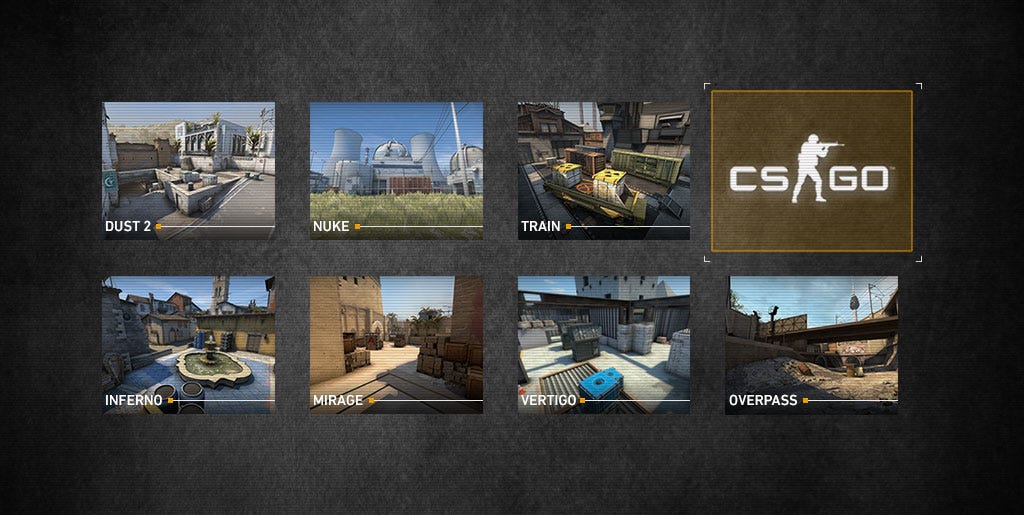
All maps are “balanced,” through a great deal of playing, so as to not give the offense (Terrorist or T-side) or defense (Counter-terrorist, or CT-side) a particularly large advantage against the other side. Some advantage may exist—each team gets a crack at offense and defense, so that doesn’t disqualify a map from being “balanced.”
Plus, at their core, all maps are a similar idea. You have two bomb sites, and there are multiple different pathways between them, so the attacking team might fake to one site but go out another, or keep their options open and try to lure out defenders and win one-on-one duels.
But each map and each bomb site is unique, and there’s an awesome variety in these seven maps on the different kinds of angles used to “hold” each site, whether the CT-side is trying to prevent the T-side from entering, or whether the T-side has managed to plant the bomb and needs to defend it until it goes off.
Some maps have a lot of verticality, while others are more flat. Some maps might make it a bit easier for the T-side to rotate, or require the CT-side to consider more potential entry points to the bomb sites. Some maps might favor players who are proficient at particular guns, even if, most of the time, they’ll be loading out with AKs.
All seven maps have very different strategic metas—different tactics you might see and different strengths that might shine for teams when on the T-side or CT-side of any particular map, and differing amounts of “information” you might pick up from hearing enemy noises in particular areas of the map. So, naturally, some teams are better at some maps and worse at others.
But also—being incredibly proficient on seven different maps is hard. So, most pro teams have a “permaban” on a particular map—as in, teams always use their first ban on one particular map, just so they don’t have to practice on it. It takes out some guess work—Liquid know they’ll never have to play Train, so they can just focus on being proficient on the six other maps.
Most teams have a strong ban on a particular map, so the first two bans in any best-of-three match-up are likely a foregone conclusion. Unless, basically, those bans line-up. Then there’s a question of what a team’s second ban might be.
But, let’s get back to the first part of the question to explore a bit more into Team Liquid’s proficiencies. Why is Train, in particular, their first ban? Especially considering they’ve been quite weak on Vertigo in recent competitions? Is it time for them to switch their ban to Vertigo?
Why Team Liquid might not excel on Train, specifically.
Train is a map with… a lot of train cars. They make long, very long, and tight angles that favor strong AWP players, who are used to holding down tiny angles and firing off twitch, one-hit kills at the first hint of movement, when someone peeks out from around a corner. If you look at HLTV stats with the Train filter on, all the top rated players on the map are their team’s primary AWP players.
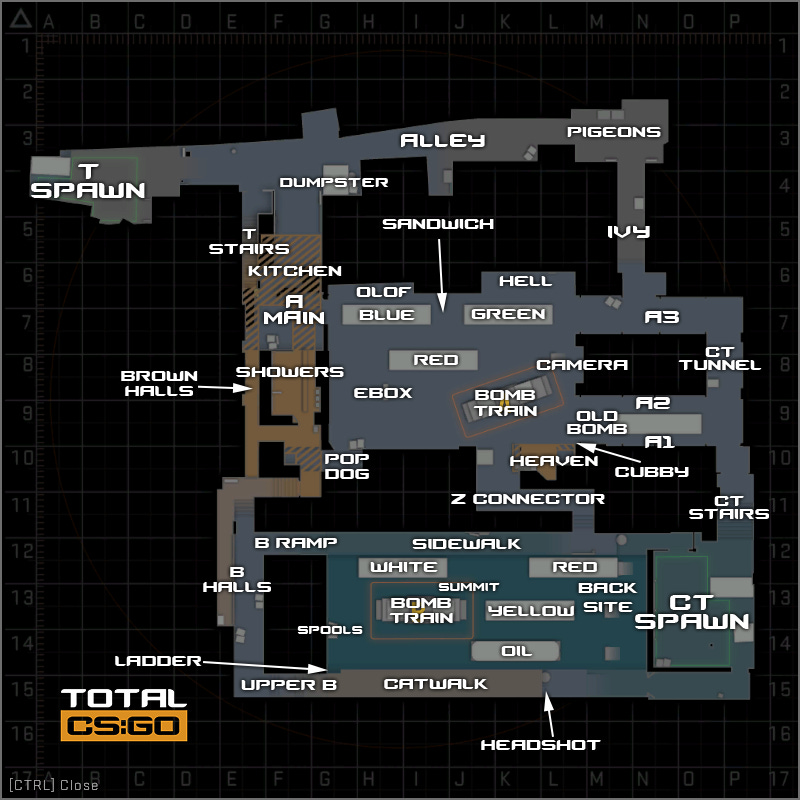
Most teams have a primary AWP player and a secondary AWP player, when on the CT-side they want to run an AWP on both bomb sites. On some maps, due to their having more long angles, you’ll see more double AWP loadouts are far more common than on others. Train is definitely one of those maps, with particularly long angles for holding both sites, and this checks out in a higher percentage of AWP usage on the map.
Perhaps this also results in the significant advantage for the CT-side on the map—a ten percent difference or 55 percent vs 45 percent win percentage—with CTs far more likely to run a double-AWP loadout than a T-side, which may need to spend more money, in general, on utility grenades for entry plays.
The thing about Team Liquid, though, is that they don’t really have a second AWP role player. Liquid has a highly versatile five man roster, with five good riflers who can take on different roles and swap for different match-ups. ELiGE is one of the best and most consistent pure riflers in the world. Twitzz, when he’s on, can look just as good as ELiGE. Grim, so far, seems consistent and hits his shots. Stewie2K can produce insane highlights and make aggressive plays for early dominance in a round. But only NAF in the current line-up is a particularly strong AWP player.
Stewie2K used to be considered one of Team Liquid’s three possible AWPers, when the roster still had Nitr0. But maybe In-Game Leader duties or the added pressure of being a more dedicated second AWP have highlighted his weaknesses with the gun, or caused his proficiency there to wane. In the past three months since losing Nitr0, he’s used the gun a bit more often, but he’s pretty out of form.
So, on a map that might strongly favor teams with two strong AWPers, we’re pretty unlikely to see Liquid ever change that first ban pick with this roster.
Tune in at 10:30AM ET to see Liquid take on MAD Lions.
I wrote a preview of this match-up in my last blog. I’ve decided to only drop YouTube links, where available, just because I think it’s more accessible to a wider audience, and the chat generally isn’t quite as insane. So, watch that on YouTube, here: